
YesMeasureYesMeasure
Aggregates & Hardscaping

Gravel Calculator

Calculate gravel volume in cubic yards, weight in tons, and 50-lb bags for driveways, pathways, and patios.

ft
ft
in
Standard depths:
Gravel type & densityCrushed Stone #57 (~1.40 tons/yd³)
▾
Price per ton or per cubic yardOptional
▾
$
$

Ready to calculate

Enter your area dimensions and depth to see total gravel tons, volume, and bags.

The Mathematics & Density

How Gravel Volume & Weight Are Calculated

Gravel is sold in bulk by the cubic yard or by weight (tons), while retail stores sell 50-lb bags. Professional landscape contractors follow a 4-step mathematical workflow to calculate required volume and weight.

01

Surface Area

Length × Width (or πr²)

Computes the flat square footage of your driveway, pathway, or patio bed in feet.

02

Cubic Yard Volume

(Area × Depth / 12) ÷ 27

Multiplies depth in feet and converts cubic feet into cubic yards (1 yd³ = 27 cu ft).

03

Compaction Factor

Volume × 1.10

Adds 10% to 15% extra material to account for roller compaction, sub-base settling, and grading slope.

04

Tons & 50-lb Bags

Yards × Density

Multiplies bulk density (~1.4 tons/yd³ for crushed stone) or divides total lbs by 50 for bags.

Trade Reference Guide

Recommended Gravel Depths & Material Densities

Selecting the appropriate depth and stone size prevents rutting, weed intrusion, and premature settling under traffic loads.

Recommended Depths by Application

Garden Borders & Mulch Topping2 inches (5 cm)
Walking Paths & Casual Patios3 inches (7.5 cm)
Residential Vehicle Driveways4 inches (10 cm)
Heavy Vehicle & Sub-Base Prep6 to 8 inches (15–20 cm)

Common Aggregate Densities

Crushed Stone #57 (3/4″)~1.40 tons / yd³ (2,800 lbs)
Pea Gravel (3/8″)~1.35 tons / yd³ (2,700 lbs)
Crusher Run (Road Base)~1.50 tons / yd³ (3,000 lbs)
River Rock (1″–3″)~1.35 tons / yd³ (2,700 lbs)
Landscape & Hardscaping Guide

How to Calculate Gravel in Tons, Cubic Yards & 50-lb Bags

Whether you are using a driveway gravel calculator to resurface a rural driveway, a pea gravel calculator for a backyard patio, or a french drain gravel calculator for yard drainage, ordering the precise volume in cubic yards (or cubic meters) and weight in tons prevents costly re-delivery fees and wasted material.

1. Using a Gravel Calculator in Yards vs. Tons

Gravel suppliers quote prices using two different measurements depending on whether you purchase by volume or on a certified vehicle scale:

Gravel Calculator Cubic Yards (yd³ / m³)

Volume equals surface area multiplied by trench depth. A gravel calculator yards tool converts square feet and inches into cubic yards (1 yd³ = 27 ft³ = 0.7645 m³).

Gravel Calculator Tons (Weight)

Quarries bill by the short ton (2,000 lbs / 0.907 metric tonnes). A gravel calculator tons formula multiplies volume by material density (typically 1.40 tons/yd³ for crushed stone).

2. Driveway Gravel Calculator: Depths & Layering

When using a gravel calculator for driveway installations, proper layering ensures durability under heavy vehicle traffic without developing deep ruts or potholes:

  • Sub-Base Layer (4″ to 6″ depth): Use coarse crushed gravel calculator settings for Crusher Run (Dense Graded Aggregate) or #3 crushed stone (1.5″ to 2.5″) to form a rigid foundation.
  • Top Dressing Layer (2″ to 3″ depth): Use a 3/4 gravel calculator or gravel calculator 57 stone (3/4″ washed limestone / granite) for clean drainage, aesthetic curb appeal, and smooth driving.
  • Compaction Allowance: Always include 10% to 15% extra material in your driveway gravel calculator to account for mechanical roller compaction.

3. Popular Aggregate Sizes: #57 Stone, Pea Gravel & 20mm Gravel

Different projects demand specific aggregate sizing and bulk densities:

Aggregate TypeSizeDensityBest Project Use
#57 Crushed Stone (3/4″)0.75 in (19mm)1.40 tons/yd³Driveways, French drains, shed foundations, retaining backfill
Pea Gravel (3/8″)0.375 in (10mm)1.35 tons/yd³Garden walkways, dog runs, decorative patios, play areas
20mm Gravel (UK / Metric)20 mm (0.8 in)1.60 tonnes/m³UK driveways, drainage soakaways, decorative landscaping
Crusher Run / Road Base0 to 1.5 in (with dust)1.50 tons/yd³Heavy-duty base under paver patios, asphalt, and concrete

4. French Drain & Circular Firepit Calculations

Specialized hardscaping geometries require dedicated formulas:

French Drain Gravel Calculator

For a standard 12″ wide by 18″ deep drainage trench with a 4″ perforated pipe, calculate trench volume and subtract pipe displacement (~0.09 cu ft per linear ft). Use washed 3 4 gravel calculator settings to prevent clogging.

Gravel Calculator for Circle / Firepit

For circular patios and fire pit surrounds, our gravel calculator for circle uses the formula Area = π × r². A 16-ft diameter fire pit circle at 3″ depth equals 201 sq ft (~1.86 cubic yards / ~2.6 tons of gravel).

5. Metric & UK Aggregate Estimating (m², m³, Tonnes)

If estimating in the UK, Europe, or Australia, switch our tool to metric mode for seamless gravel calculator uk conversions:

  • Gravel Calculator m2: Input surface area in square meters (m²) and depth in centimeters (cm).
  • Gravel Calculator m3: Converts cubic meters directly to bulk bags (approx. 850 kg / 0.55 m³ per standard jumbo bulk bag).
  • 20mm Gravel Calculator: Computes metric tonnes needed based on standard UK 20mm gravel density (~1.6 tonnes per m³).
Frequently Asked Questions

Gravel Calculation & Purchasing FAQs

Detailed answers to common questions on gravel coverage, cubic yard formulas, tonnage weights, 50-lb bag counts, and driveway depths.

How do I calculate how much gravel I need?

To calculate how much gravel you need, measure the length and width of your project area in feet to get the square footage (Length × Width). Multiply the square footage by your desired depth in feet (depth in inches divided by 12) to calculate cubic feet. Divide cubic feet by 27 to get cubic yards, and multiply cubic yards by material density (typically 1.4 tons per cubic yard for crushed stone) to determine weight in tons. Always add a 10% safety buffer for compaction and settling.

How much gravel for a 10x10 area?

A 10×10 foot area covers 100 square feet. At a standard 3-inch depth (0.25 ft), you need 25 cubic feet (approx. 0.93 cubic yards). Factoring in a 10% compaction buffer, you will need approximately 1.02 cubic yards, which equals about 1.43 tons (2,860 lbs) of #57 crushed stone or roughly 57 fifty-pound retail bags.

How to calculate 57 gravel?

To calculate #57 gravel (3/4-inch clean crushed stone), determine the volume of your trench or driveway in cubic yards (Length × Width × Depth in feet ÷ 27) and multiply by the bulk density factor of 1.40 tons per cubic yard (2,800 lbs/yd³). For example, a 20-foot by 10-foot parking pad at 4 inches depth requires 2.47 cubic yards × 1.40 = 3.46 tons of #57 gravel.

How much will 1 ton of gravel cover?

One ton (2,000 lbs) of standard crushed stone equals approximately 0.71 cubic yards (19.3 cubic feet). At a 2-inch depth, 1 ton covers approximately 115 to 120 square feet; at a 3-inch depth, it covers about 75 to 80 square feet; and at a 4-inch driveway depth, 1 ton covers approximately 55 to 60 square feet.

What is the formula for calculating the quantity of gravel needed?

The standard formula for gravel quantity is: Volume in Cubic Yards = (Length in feet × Width in feet × Depth in inches ÷ 12) ÷ 27. To find weight in tons: Tons = Volume in Cubic Yards × Material Density in tons/yd³ (usually 1.40). Finally, multiply by 1.10 to account for a 10% compaction and grade settling factor.

How do I calculate cubic feet?

To calculate cubic feet (ft³), multiply Length (ft) × Width (ft) × Depth (ft). If your depth is measured in inches, divide the inches by 12 first. For example, a garden path 30 feet long and 3 feet wide at 2 inches deep is calculated as: 30 ft × 3 ft × (2 ÷ 12 ft) = 15 cubic feet.

How many bags of gravel equal 1 ton?

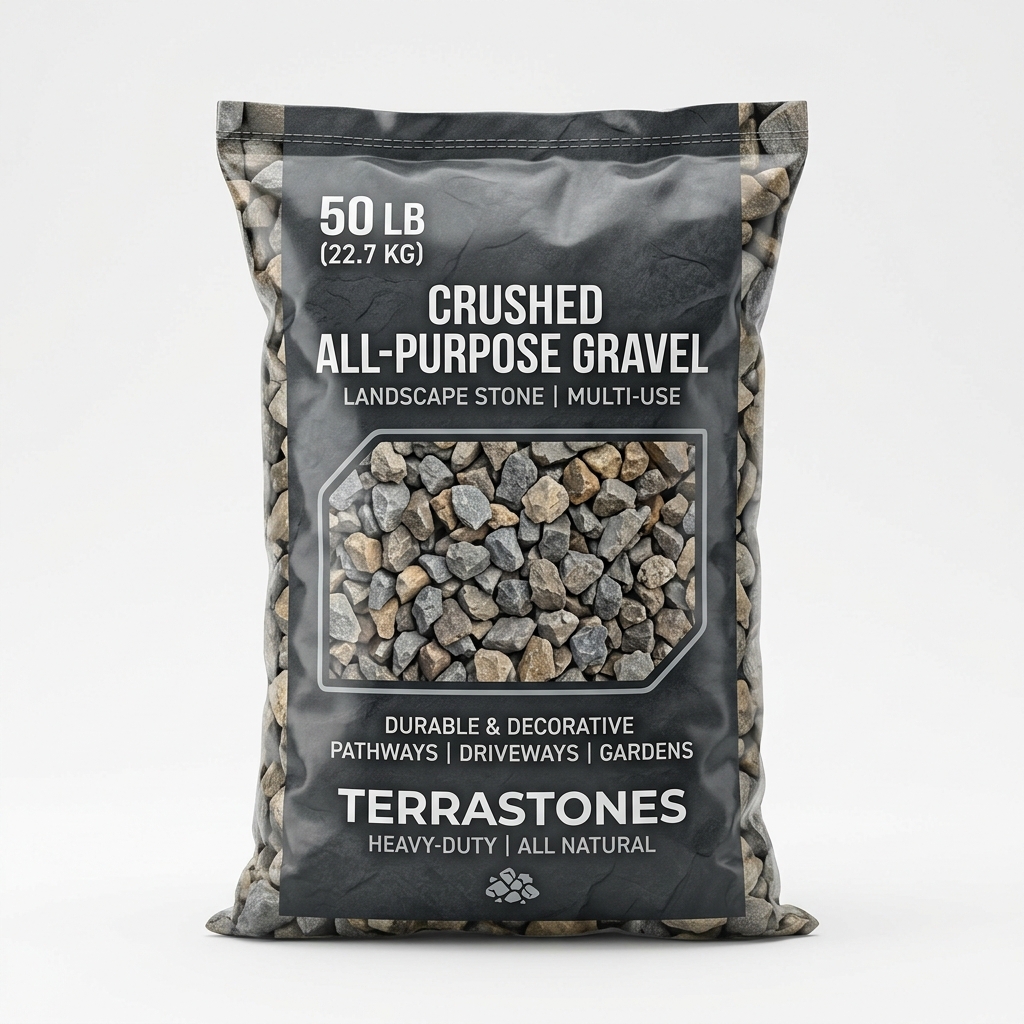
Since one short ton equals 2,000 lbs, exactly 40 fifty-pound (50 lb) bags equal 1 ton of gravel. For standard 0.5-cubic-foot bags, you need approximately 54 bags to make up 1 cubic yard (approx. 1.4 tons).

What area will 2 tons of gravel cover?

Two tons (4,000 lbs) of crushed gravel provides approximately 1.43 cubic yards (38.6 cubic feet) of material. At a 2-inch depth (garden path), 2 tons will cover roughly 230 to 240 square feet; at a 3-inch depth (patio), it covers about 150 to 160 square feet; and at a 4-inch depth (driveway), it covers approximately 110 to 120 square feet.

How many tons of gravel for 1000 square feet?

For a 1,000 square foot area: At 2 inches depth, you need approx. 8.6 tons (6.2 cu yds); at 3 inches depth, you need approx. 13.0 tons (9.3 cu yds); and at 4 inches depth (standard driveway), you need approx. 17.3 tons (12.3 cu yds) of crushed stone, including a 10% compaction allowance.

How much should 3 tons of gravel cost?

In the United States, plain crushed stone or gravel averages $35 to $65 per ton picked up at a quarry or landscape depot, making 3 tons of material cost approximately $105 to $195. With bulk delivery fees (typically $50 to $100 depending on distance), total delivered cost for 3 tons usually ranges from $160 to $300. Premium decorative gravels (like Mexican beach pebble or marble chips) cost $100 to $180 per ton.

How much do 10 tons of gravel look like?

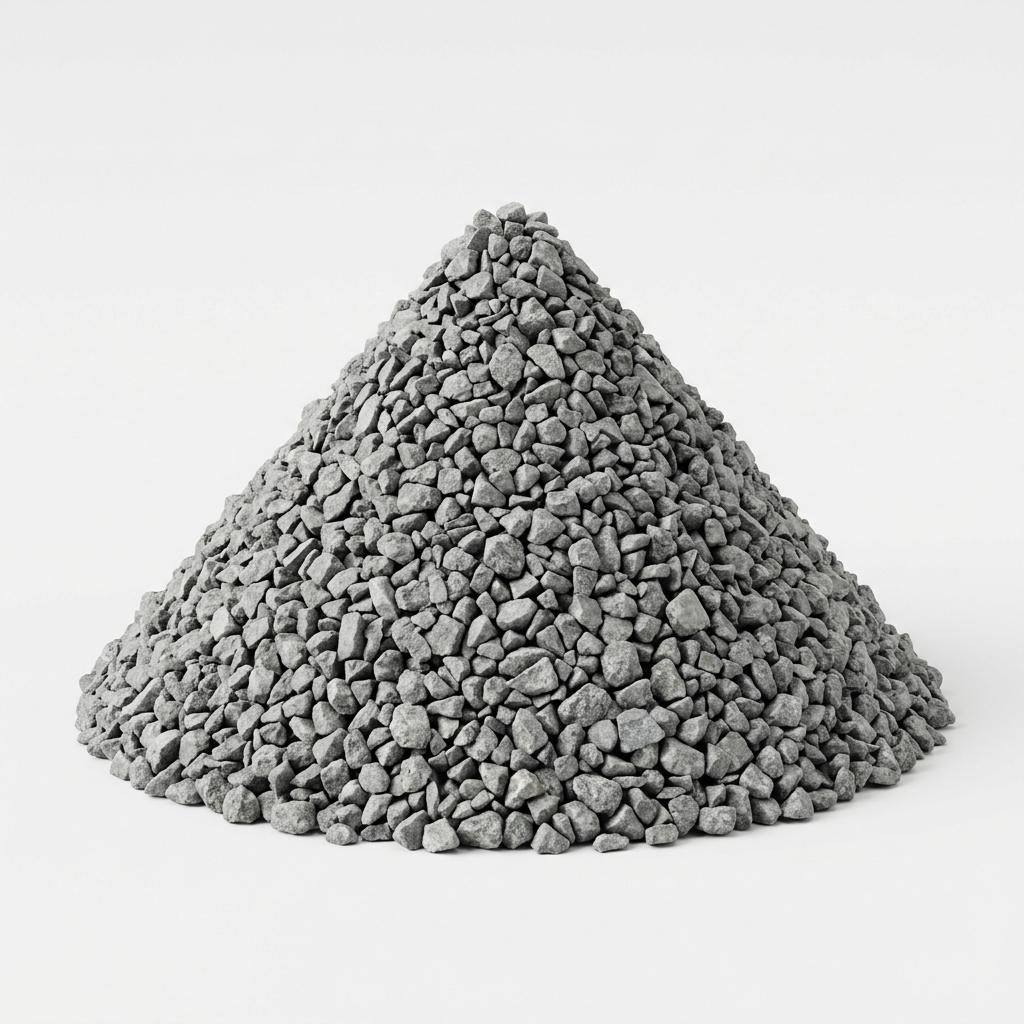
Ten tons of crushed stone equals approximately 7.1 cubic yards (about 193 cubic feet). Delivered by a standard single-axle or tandem-axle dump truck, 10 tons forms a neat conical pile approximately 12 to 14 feet in diameter at the base and 4 to 5 feet high. It is enough to cover a 600-square-foot driveway at a 4-inch compacted depth.

how much gravel do i need calculator

To find out exactly how much gravel you need, use our free YesMeasure Gravel Calculator. Select your shape (Rectangle, Circle, or Total Area), input your dimensions and desired depth, and choose your aggregate type. The calculator instantly displays total short tons, cubic yards, and 50-lb retail bag counts.

how much gravel calculator

Our gravel calculator determines exact volumes in cubic yards (and cubic meters) and weights in tons (and metric tonnes) for any landscape or hardscape project. It includes automated 10% compaction buffers and real-time cost estimations based on price per ton or bag.

how much gravel under concrete slab calculator

Building codes and concrete best practices recommend a 4-inch compacted sub-base of #57 crushed stone or dense-graded aggregate (crusher run) beneath residential concrete slabs and patios. For a 20×20 foot garage slab (400 sq ft), a 4-inch base requires approximately 5.0 cubic yards (7.0 tons) of gravel with compaction.

how much pea gravel do i need calculator

For pea gravel (3/8-inch rounded river pebble), calculate surface area in square feet and multiply by recommended depth (usually 2 to 3 inches for walkways and patios). Pea gravel has a bulk density of 1.35 tons per cubic yard (2,700 lbs/yd³). A 15×10 foot pea gravel patio at 3 inches depth requires 1.4 cubic yards (approx. 1.9 tons or 76 fifty-pound bags).

how much gravel for fish tank calculator

For standard freshwater aquariums, the general rule of thumb is 1 to 1.5 pounds of aquarium gravel per gallon of tank capacity to achieve a standard 1.5 to 2-inch bed depth. For example: a 10-gallon tank requires 10 to 15 lbs of gravel, a 20-gallon tank requires 20 to 25 lbs, and a 55-gallon tank requires approximately 55 to 65 lbs.

how much gravel for driveway calculator

For residential gravel driveways, plan for a total depth of 4 to 6 inches across two compacted layers (a coarse sub-base plus a #57 top dressing). For a standard 50-foot long by 10-foot wide driveway (500 sq ft) at 4 inches depth, you will need approximately 6.2 cubic yards or 8.7 tons of gravel with a 10% compaction allowance.

how many bags of gravel do i need calculator

To calculate 50-lb retail bags: 1) Find total volume in cubic feet (Sq Ft × Depth in inches ÷ 12); 2) Divide cubic feet by 0.5 (since standard 50-lb bags contain approx. 0.5 cubic feet of stone); 3) Add 10% for settling. For example, a 50 sq ft garden bed at 2 inches depth requires 8.3 cu ft ÷ 0.5 = 17 to 18 bags.