YesMeasureYesMeasure
Aggregates & Masonry

Sand Calculator

Calculate exact sand volume in cubic yards, weight in tons, and 50-lb retail bags for paver patios, sandboxes, swimming pools, and concrete mortar.

1

Area Dimensions & Sand Depth

Enter Dimensions
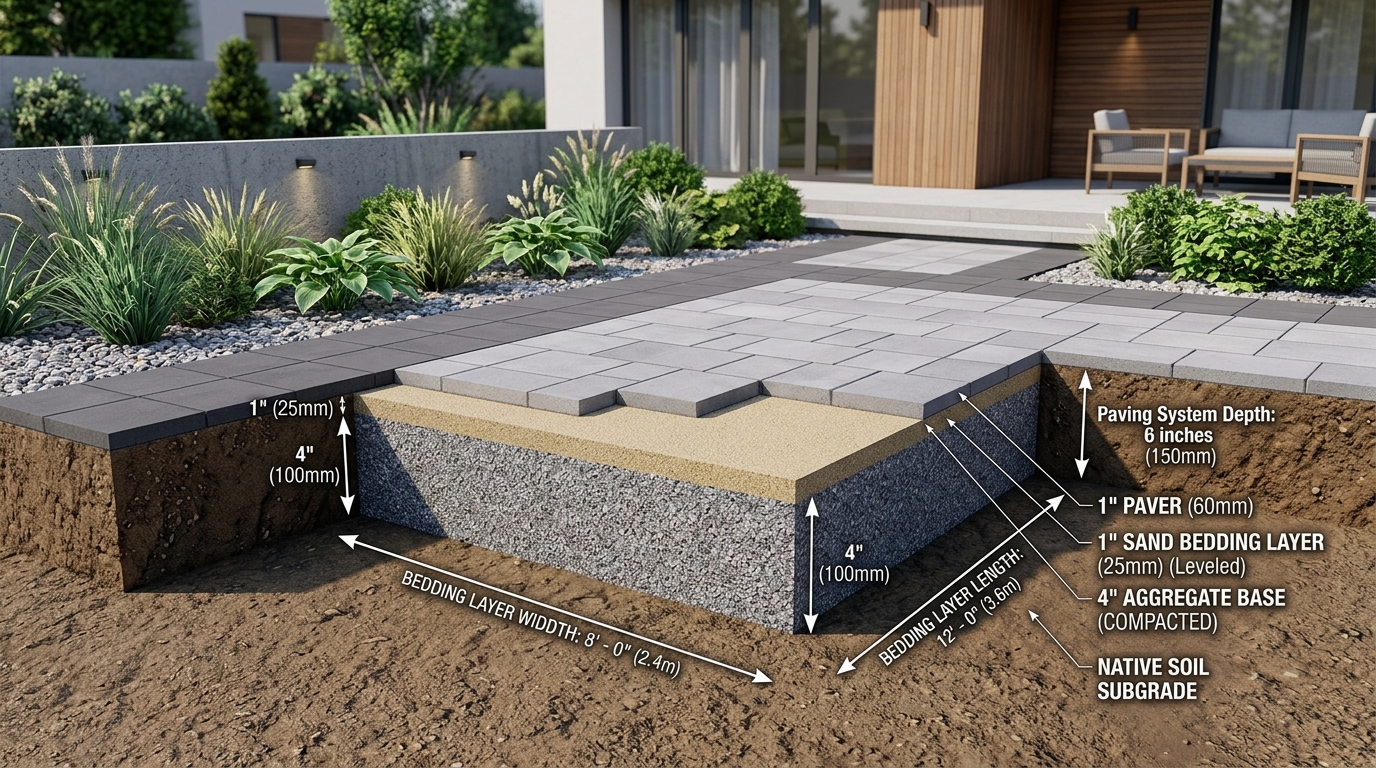
3D Architectural Diagram of Sand Bedding Layer for Paver Patio
Measure area footprint and target sand thickness1″ Standard Paver Bed
FT
FT
1.0 inch (Paver Bed)
1″ (Paver Bed)2″ (Pool Base)4″ (Sub-Base)6″+ (Sandbox)
1-Tap Project Presets:
2

Sand Type & Density

2,700 lbs/yd³ (1.35 T)

Ready to calculate

Enter your area dimensions and depth to see total sand volume, tonnage, and bags.

Masonry & Hardscaping Handbook

Sand Calculation Guide: Types, Densities & Bedding Depths

Whether you are using our paver sand calculator to screed a patio, preparing an above-ground pool base, or ordering bulk aggregate from a quarry, choosing the correct sand grade and density ensures lasting structural strength.

Sand Calculator for Patio: The 1-Inch Paver Bedding Rule (ASTM C33)

The Interlocking Concrete Pavement Institute (ICPI) strictly specifies that paver bedding sand must be laid at a uniform thickness of exactly 1 inch (25 mm) across a fully compacted gravel road base:

Rule #1: Exactly 1″ (Do Not Exceed 1.5″)

Excessively thick sand beds will shift and rut under foot traffic and car tires.

Rule #2: Screed, Don't Pre-Compact

Leave bedding sand screeded loose. Plate compaction occurs after pavers are placed on top.

Rule #3: Use Angular Sharp Sand

Use a sharp sand calculator or grit sand calculator. Angular grains interlock tightly to prevent washouts.

Sand Calculator Tons: Weight Densities & Material Types

When using our sand calculator square feet or sand calculator yards converter, weight ranges between 1.20 and 1.40 tons per cubic yard:

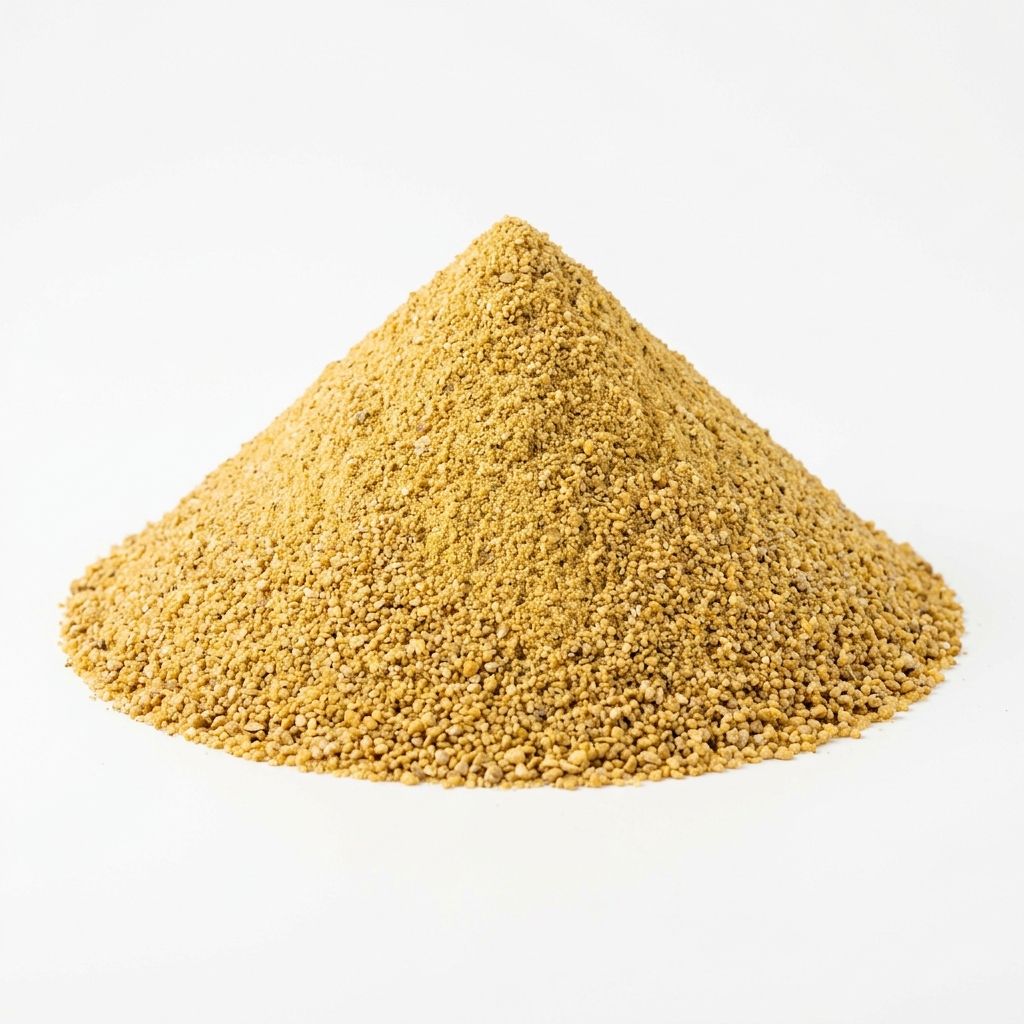
Sharp Sand / Concrete Sand2,700 lbs / yd³1.35 tons/yd³. Coarse angular aggregate for paving sand calculator screeds and slab mixing.
Building Sand / Masonry2,600 lbs / yd³1.30 tons/yd³. Fine clean aggregate for building sand calculator bricklaying and mortar.
Washed Play Sand2,400 lbs / yd³1.20 tons/yd³. Triple-washed, rounded, dust-free sand for children sandboxes.
Compacted / Damp Sand2,800 lbs / yd³1.40 tons/yd³. Moist aggregate for sand calculator for pool bases and heavy tamping.

Sand Calculator for Round Pool & Above-Ground Bases

Installing a vinyl-liner pool requires an even, stone-free cushion to protect the liner from punctures:

  • Sand Calculator for Round Pool: Our sand calculator circle calculates round pool beds (Area = π × r²). For a 15-foot diameter round pool, a 2-inch sand bed requires 1.09 cubic yards (approx. 1.5 tons or 60 fifty-pound bags of fine masonry sand).
  • Perimeter Pool Cove: Always build a 3-inch high, 3-inch wide triangular sand cove along the entire inside perimeter wall to prevent the vinyl liner from ballooning outward under water pressure.
  • Leveling Sand Calculator vs Sub-Base: Never use sand to level an unlevel yard. Always excavate down to level subsoil first, then apply a uniform 2-inch sand layer.

Polymeric Sand Calculator & Aquarium Substrate Estimating

For specialized hardscaping and indoor projects:

  • Polymeric Sand Calculator: Specially engineered with polymer binders, polymeric sand hardens when misted with water to stop weeds and ants. One 50-lb bag covers 60 to 85 sq ft of standard pavers with ⅛-inch joints.
  • Aquarium Sand Calculator: For freshwater and planted fish tanks, our sand calculator for aquarium calculates pounds of substrate: (Tank Length in inches × Tank Width in inches × Desired Depth in inches) ÷ 17.4 = Pounds of Aquarium Sand.
  • Sand Calculator UK: Supports metric millimeters, cubic meters (m³), and standard 850 kg bulk dumpy bags for British builders.
Frequently Asked Questions

Sand Volume & Weight Calculation Guide

Expert answers to common questions about calculating sand volume, coverage per ton, 50-lb bag requirements, pool bases, and masonry standards.

Sand Volume, Units & Area Calculations

How can i calculate sand needed for an area?
To calculate sand needed for any area: 1. Multiply the length by the width in feet to determine total square footage. 2. Multiply square footage by your desired depth in inches, then divide by 12 to get total cubic feet. 3. Divide cubic feet by 27 to find cubic yards. 4. Add a 10% compaction and waste buffer. For example, a 10×10 ft patio (100 sq ft) with a 1-inch sand bed requires (100 × 1/12) ÷ 27 = 0.31 cubic yards (approx. 0.42 tons or 17 fifty-pound bags).
How is sand calculated?
Sand is calculated by volume (cubic feet or cubic yards) and then converted to weight (tons or kilograms) based on material density. The standard volume formula is Volume (cu yds) = [Length (ft) × Width (ft) × (Depth in inches ÷ 12)] ÷ 27. To convert cubic yards to weight, multiply by the density factor: dry coarse sand weighs approx. 1.35 tons (2,700 lbs) per cubic yard, while damp sand weighs approx. 1.40 tons (2,800 lbs) per cubic yard.
How to calculate 1 unit of sand?
In construction and civil engineering (especially in British and Commonwealth standards), '1 unit of sand' typically refers to 100 cubic feet (100 cft, also called 1 Brass). Since 1 cubic yard equals 27 cubic feet, 1 unit (100 cft) equals approximately 3.70 cubic yards or about 5.0 to 5.2 metric tons (approx. 5,000 kg) of coarse construction sand.
How much sand for 100 square feet?
The amount of sand needed for 100 square feet depends on layer depth: • 1-inch depth (standard paver bedding): 0.31 cubic yards (833 lbs / 17 fifty-pound bags) • 2-inch depth (pool base or heavy bedding): 0.62 cubic yards (1,667 lbs / 34 fifty-pound bags) • 3-inch depth: 0.93 cubic yards (2,500 lbs / 50 fifty-pound bags) • 6-inch depth (sandbox): 1.85 cubic yards (5,000 lbs / 100 fifty-pound bags).
How much sand is required for a 1000 sq feet area?
For a 1,000 square foot area: • At a 1-inch depth (paver screed layer): requires 3.09 cubic yards (approx. 4.17 tons or 167 fifty-pound bags) • At a 2-inch depth: requires 6.17 cubic yards (approx. 8.33 tons or 334 bags) • At a 4-inch depth: requires 12.35 cubic yards (approx. 16.67 tons). For projects over 1,000 sq ft, ordering bulk dump truck delivery from a quarry is far more economical than buying individual bags.
How much sand is required for a 1200 sq ft house?
For building construction and masonry of a 1,200 sq ft residential house, sand requirements depend on the foundation and plastering scope: • Plastering (internal & external walls): approx. 1,200 to 1,500 cft (12 to 15 units / 45 to 55 cubic yards / ~60 to 75 tons) • Brickwork & Mortar: approx. 600 to 800 cft (6 to 8 units / ~22 to 30 cubic yards) • Concrete Foundation & Slab (1:2:4 mix): approx. 800 to 1,000 cft. Total estimated sand for a complete 1,200 sq ft home ranges from 2,600 to 3,300 cft (approx. 95 to 125 cubic yards or 130 to 170 tons).

Sand Tonnage, Bag Counts & Conversions

How far does 1 ton of sand cover?
One ton (2,000 lbs) of standard sharp/concrete sand equals approximately 0.74 cubic yards (20 cubic feet). In terms of surface coverage: • At 1-inch depth (paver bedding): 1 ton covers approx. 240 square feet • At 2-inch depth (pool base): 1 ton covers approx. 120 square feet • At 3-inch depth: 1 ton covers approx. 80 square feet • At 4-inch depth: 1 ton covers approx. 60 square feet.
How many feet of sand are in 1 ton?
There are approximately 14.8 to 16.7 cubic feet of sand in 1 ton (2,000 lbs), depending on moisture and compaction. Dry coarse sand has a density of approx. 100 lbs per cubic foot (yielding 20 cu ft per ton), while damp compacted sand has a density of approx. 104–110 lbs per cubic foot (yielding approx. 18.2 to 19.2 cu ft per ton).
How many kg is 1 cft of sand?
One cubic foot (1 cft) of dry construction sand weighs approximately 45 to 50 kilograms (approx. 100 to 110 lbs). For fine masonry sand, 1 cft weighs approx. 44 kg (96 lbs), while moist or compacted river sand can weigh up to 52 kg (115 lbs) per cubic foot.
How much sand do i need calculator
To determine how much sand you need, enter your area's length, width, and desired depth into our online Sand Calculator. For example, for a 12×12 ft sandbox at 6 inches depth: 12 × 12 × (6/12) = 72 cubic feet ÷ 27 = 2.67 cubic yards (approx. 3.60 tons or 144 fifty-pound bags).
How many bags of sand do i need calculator
Standard retail bags of all-purpose and play sand weigh 50 lbs (approx. 0.5 cubic feet per bag). To calculate bags: divide your total cubic feet by 0.5 (or divide total weight in lbs by 50). For a 10×10 ft paver area with a 1-inch bed (8.33 cu ft), you need 8.33 ÷ 0.5 = 16.7 → round up to 17 bags of 50 lbs each.