YesMeasureYesMeasure
Horticultural & Landscape Estimator

Plant Calculator

Calculate exact plant quantities, staggered vs. grid spacing layouts, groundcover coverage, and mulch requirements for raised beds, flower borders, and vegetable gardens.

1

Garden Bed Dimensions

Area & Geometry
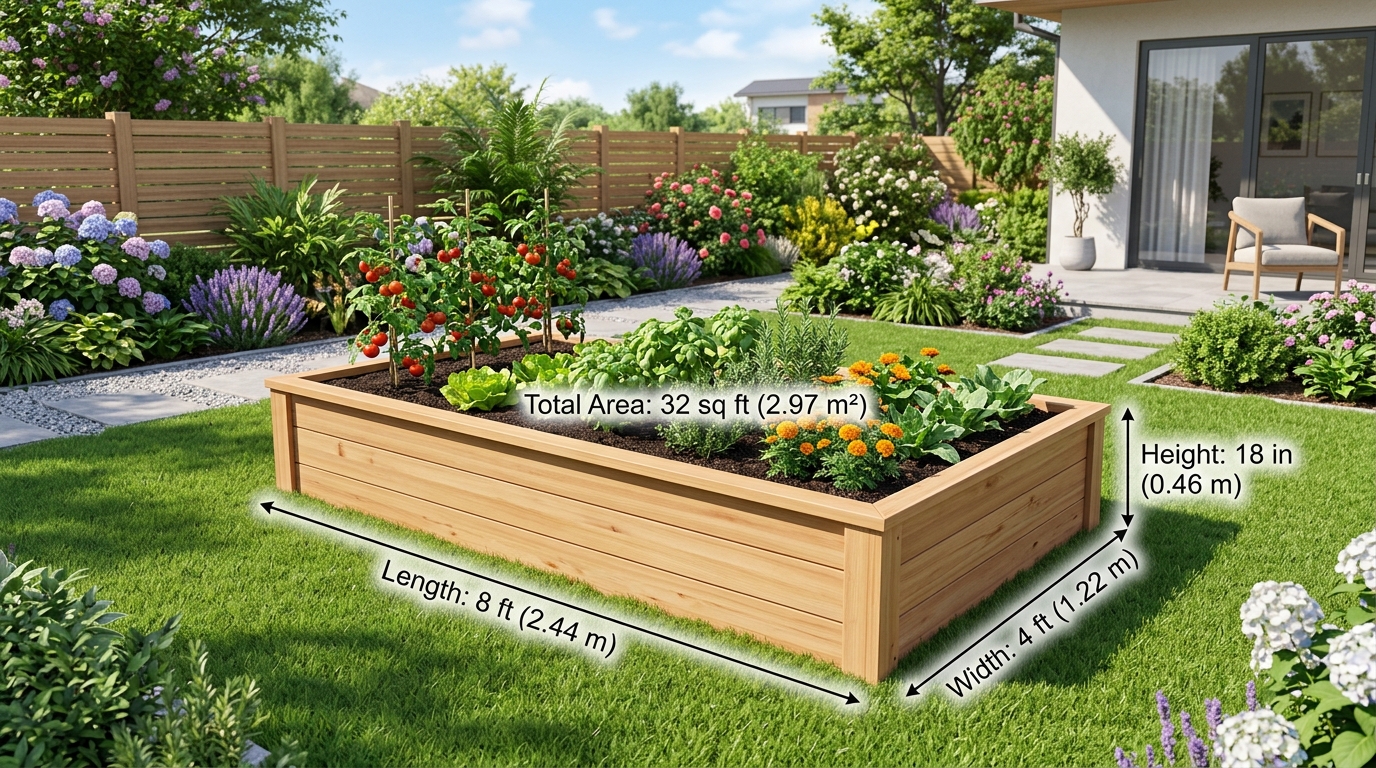
3D Architectural Diagram of Raised Garden Bed Dimensions
Measure planting bed boundary (Length × Width)32.0 sq ft (2.97 m²)
FT
FT
Quick Presets:
2

Plant Spacing (On-Center)

12″ Spacing
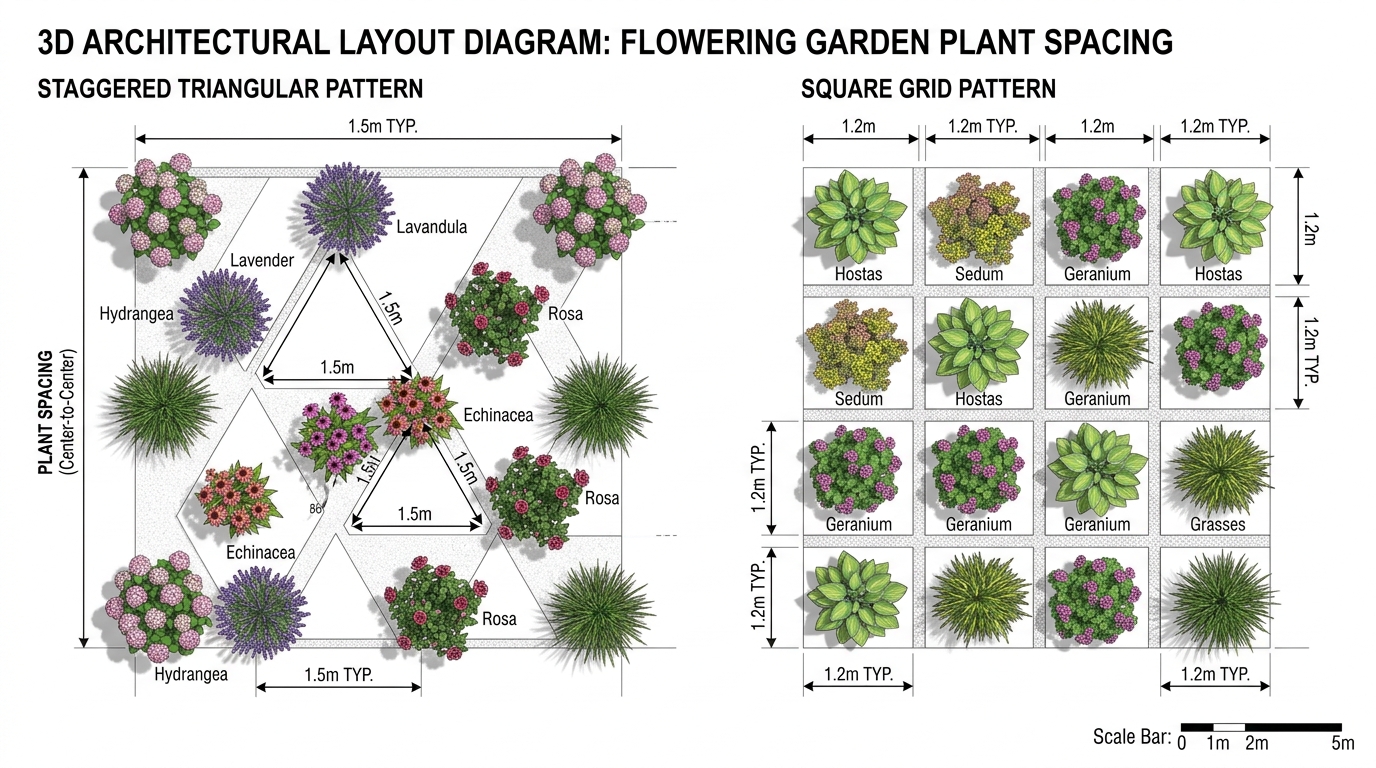
3D Architectural Diagram of Plant Spacing Patterns (Triangular vs Grid)
Triangular Staggered (Dense) vs. Square Grid (Rows)Triangular Stagger
12.0 inches (1.0 ft)
4″ (Dense)12″ (Standard)24″ (Shrubs)48″+ (Hedges)
3

Pattern & Mulch Options

Layout Settings
Total Plants Needed32 sq ft
37 Plants
≈ 4 flats

At 12″ spacing (Triangular Staggered)
Garden Layout Map8′ × 4′ Bed
Planting Rows5 rows (~7-8/row)
Border Edge Gap6″ from border
What to Buy
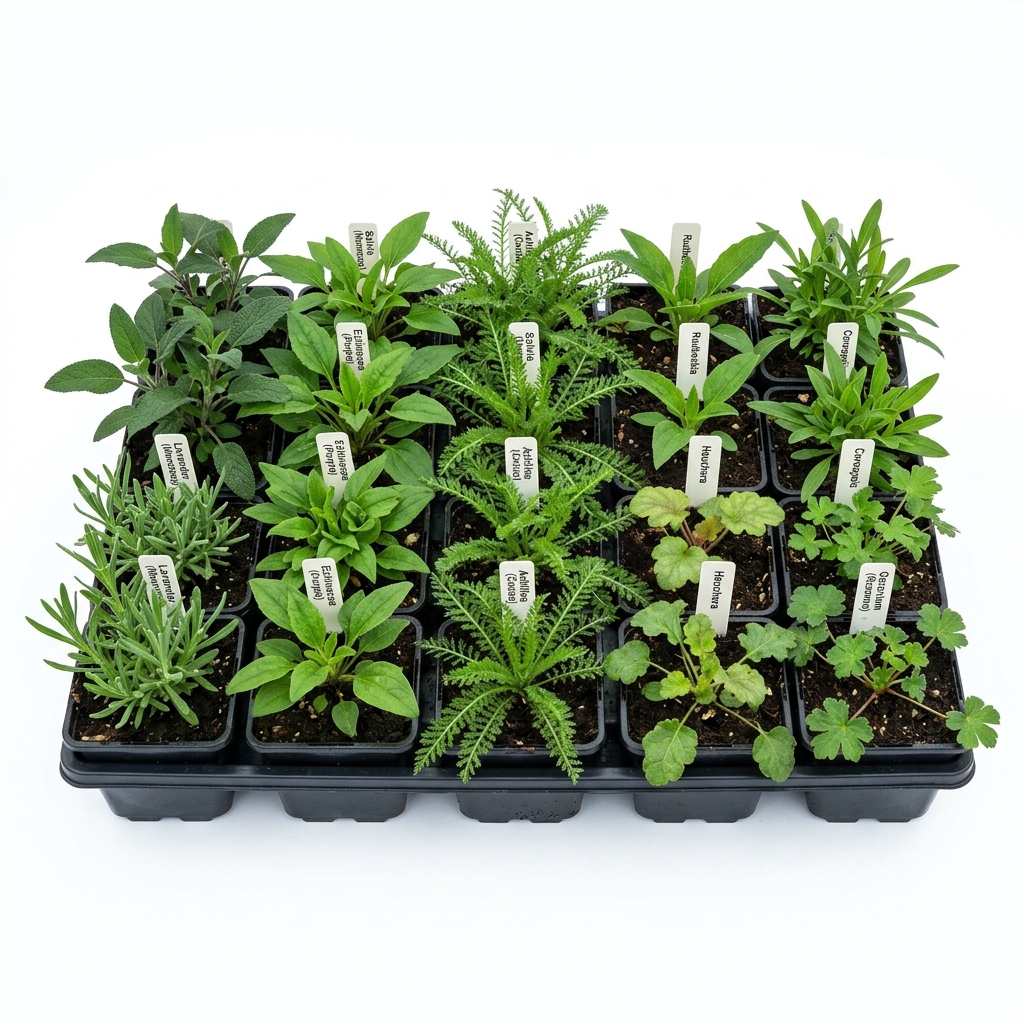
Potted Plants

37 Potted Plants

37 pots

12″ on-center • (4) nursery flats

Garden Mulch

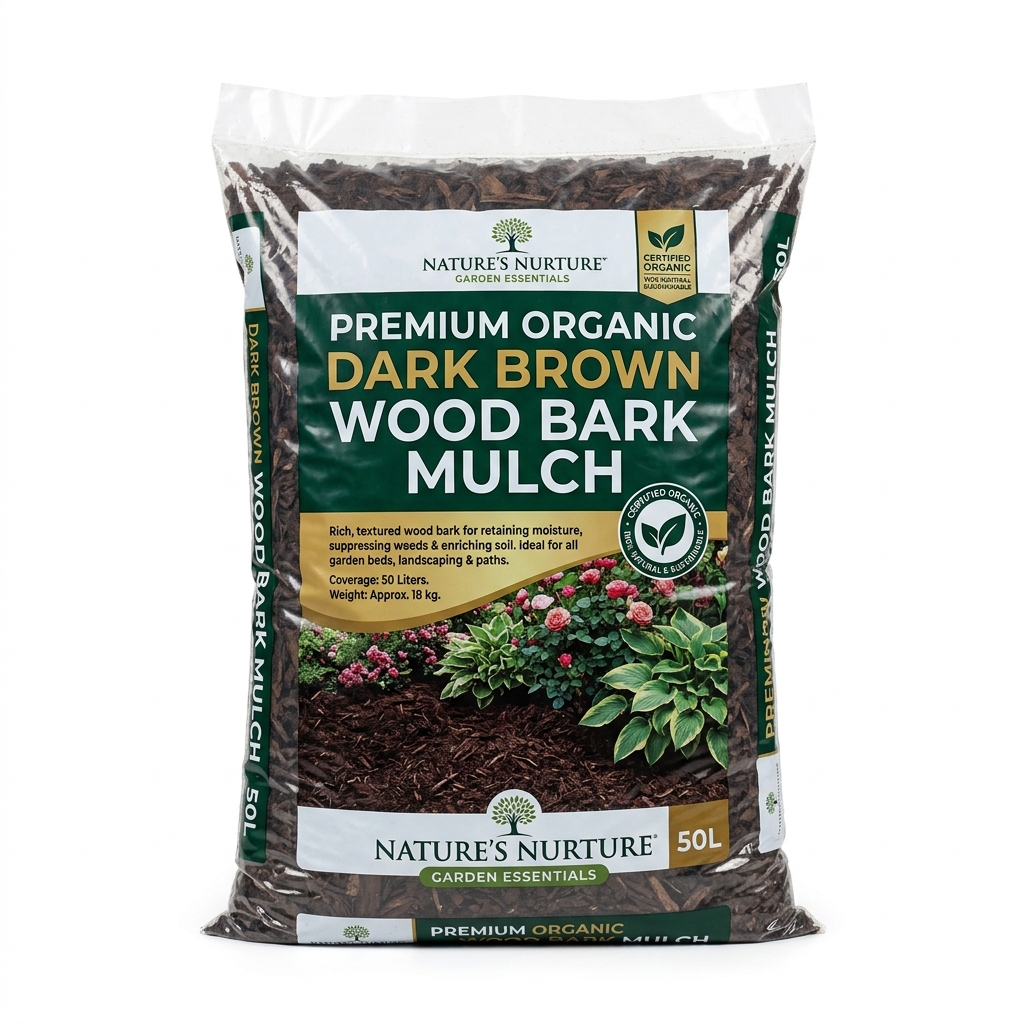
3 Bags Wood Mulch

3 bags

2 cu ft bags for 2″ weed-control depth

Estimates include standard waste buffers. Actual material requirements may vary by project layout and manufacturer specs. Always verify before ordering.

37 Plants @ 12″ • 32 sq ft
Layout: Triangular Stagger
Master Gardening & Agricultural Handbook

Plant Spacing Formulas, Square-Foot Density & Acreage Estimating

Proper plant spacing is the cornerstone of healthy botanical design. Using an accurate plant quantity calculator ensures adequate root volume, optimal sunlight absorption, good airflow to prevent fungal diseases, and continuous weed-suppressing foliage coverage.

How Many Plants Do I Need Calculator: The Core Formulas

To determine how many plants calculator quantities for any landscape project, horticulturists calculate the area of the bed and divide by the effective area occupied by each plant:

Square Grid Pattern Formula

Plant Count = Total Area (sq ft) ÷ (Spacing in ft)²

Best for vegetable beds, square-foot gardens, and irrigation trenches where plants are aligned in straight perpendicular rows.

Triangular Staggered Formula

Plant Count = Total Area (sq ft) ÷ ((Spacing in ft)² × 0.866)

Best for flower beds, perennials, and groundcovers. Staggers rows to use ~15.5% more plants, closing canopy gaps and blocking weeds.

Plants Per Square Foot Calculator & Botanical Density Chart

Wondering how many plants per square foot are needed? Here is the trade standard density reference for our plant spacing calculator square feet engine:

6-Inch Spacing4.0 Plants / sq ftCreeping thyme, pachysandra, sedum, pansies.
12-Inch Spacing1.0 Plant / sq ftConeflowers, hostas, lavender, marigolds.
18-Inch Spacing0.44 Plants / sq ftTomatoes, peppers, kale, daylilies.
24-Inch Spacing0.25 Plants / sq ftBoxwoods, hydrangeas, landscape shrubs.

Plant Population Calculator & How Many Plants Per Acre Calculator

For agricultural crop estimating, commercial tree orchards, and large landscape tracts, our planting calculator scales to total field acreage:

  • Acreage Population Formula: 1 Acre = 43,560 square feet. Plants per Acre = 43,560 ÷ (Row Spacing in ft × In-Row Spacing in ft).
  • Standard Crop Densities: Corn at 30″ rows × 6″ spacing = ~34,848 plants/acre. Soybeans at 15″ rows × 3″ spacing = ~139,392 plants/acre. Apple orchards at 12 ft × 6 ft spacing = ~605 trees/acre.
  • Plant Calculator Rust & Virtual Gardening: Gamers optimizing greenhouse farming in survival simulators like Rust can apply these exact center-to-center ratios to ensure maximum clone growth rates, 100% lighting overlap, and peak scrap/yield harvest cycles.

The Golden Border Edge Setback Rule (½ Spacing)

When digging the outer perimeter row along a sidewalk, patio paver edge, or timber lawn border, master landscape designers always set the first row at half the on-center plant spacing ($S / 2$):

For example, when planting perennials on 12-inch spacing, dig your first row 6 inches inside the bed boundary. As the plant reaches its mature 12-inch foliage diameter (6-inch radius from center), the canopy brushes right to the border edge with a neat, manicured finish without spilling across paths or requiring constant trimming.

Frequently Asked Questions

Plant Spacing & Garden Calculation Guide

Expert answers to common questions about garden bed plant counts, square-foot density, triangular staggered layouts, and nursery ordering.

Garden Plant Calculations & Formulas

How many plants do I need for my garden?
The number of plants you need depends on your total garden bed square footage and the recommended on-center spacing for your specific plant variety. For example, a standard 4×8 ft raised bed (32 sq ft) planted with 12-inch spaced perennials requires 32 to 37 plants (depending on whether you use a square grid or staggered triangular pattern). Groundcovers at 6-inch spacing require 128 plants, while large shrubs at 24-inch spacing require 8 plants.
How do I calculate how many plants I need?
1. Calculate your garden bed area in square feet (Length × Width for rectangles, or π × r² for circles). 2. Determine your plant's on-center spacing in feet (e.g. 12 inches = 1.0 ft, 18 inches = 1.5 ft). 3. Choose your planting pattern: For a square grid, divide total area by spacing squared (Area ÷ Spacing²). For a staggered triangular layout (recommended for flower beds to eliminate bare soil gaps), divide area by (Spacing² × 0.866).
How do I calculate the number of plants for a garden bed?
Multiply the length and width of your garden bed in feet to find total square feet, then divide by the square footage occupied by each plant based on its spacing. For example, in an 8×4 ft bed (32 sq ft) with 12-inch spacing in a triangular staggered layout: 32 ÷ (1.0² × 0.866) = 36.9 → round up to 37 plants.
How many plants do I need for a 4×8 garden bed?
A 4×8 ft raised bed has an area of 32 square feet. The number of plants needed depends on your plant variety: • 6-inch spacing (dense groundcovers/annuals): ~128 plants • 12-inch spacing (perennial flowers & herbs): 32 to 37 plants (≈ 4 nursery flats of 10) • 18-inch spacing (tomatoes, peppers, kale): ~16 to 18 plants • 24-inch spacing (bushy shrubs): ~8 plants.
How do I calculate plants for a circular garden bed?
1. Find the radius of your round bed (half the total diameter in feet). 2. Calculate the area using the circle formula: Area = π × radius² (e.g. for an 8-ft diameter circle, radius = 4 ft, Area = 3.1416 × 16 = 50.3 sq ft). 3. Divide the area by your spacing factor. For 12-inch triangular spacing: 50.3 ÷ 0.866 = 58 plants. When planting circular beds, arrange plants in concentric rings starting from a single center accent plant outward.

Plant Spacing & Layout Guidelines

How do I calculate plant spacing?
Plant spacing is measured 'on-center'—from the center stem/crown of one plant to the center stem of the neighboring plant. Check the nursery plant tag for the mature spread (width). For a continuous hedge or mass groundcover canopy, space plants equal to their mature spread (or 10–20% closer for faster coverage). For specimen shrubs with open gaps, space plants slightly farther than their mature spread.
How many plants do I need per square foot?
The number of plants per square foot depends directly on spacing: • 4-inch spacing: 9.0 plants per sq ft • 6-inch spacing: 4.0 plants per sq ft • 8-inch spacing: 2.25 plants per sq ft • 12-inch spacing: 1.0 plant per sq ft (standard square-foot gardening benchmark) • 18-inch spacing: 0.44 plants per sq ft • 24-inch spacing: 0.25 plants per sq ft (1 plant per 4 sq ft).
How far apart should plants be planted?
Standard horticultural spacing guidelines by category: • Groundcovers & annual flowers: 6 to 8 inches apart • Perennial flowers & herbs: 12 to 18 inches apart • Vegetable crops (tomatoes, peppers, brassicas): 18 to 24 inches apart • Small to medium shrubs (boxwoods, spirea): 24 to 36 inches apart • Large shrubs & privacy hedges (hydrangeas, arborvitae): 36 to 60+ inches apart.
What is the difference between plant spacing and row spacing?
• Plant Spacing (In-Row Spacing): The distance between consecutive plants along the same line or trench. • Row Spacing (Between-Row Spacing): The perpendicular distance between parallel planting rows. In square grid planting, plant spacing equals row spacing (e.g. 12″ × 12″). In staggered triangular planting, row distance is slightly narrower (Spacing × 0.866; e.g. 10.4 inches between rows for 12-inch in-row plant spacing).
Should I buy extra plants for my garden?
Yes. Master gardeners and professional landscapers recommend adding a 5% to 10% overage buffer when purchasing potted plants, bulbs, or seedlings. This accounts for transplant shock, pest damage, root rot, or natural variations in bed boundaries, ensuring you have matching nursery stock on hand without needing to make a second nursery run.